

Valve has long been a major force in virtual reality, shaping the PC VR ecosystem through SteamVR, the Valve Index, and its deep integration with PC gaming. Now, rumors and industry discussions point toward a new and ambitious VR headset often referred to as Steam Frame—a next-generation Valve VR headset designed to push immersion, performance, and accessibility to new heights.
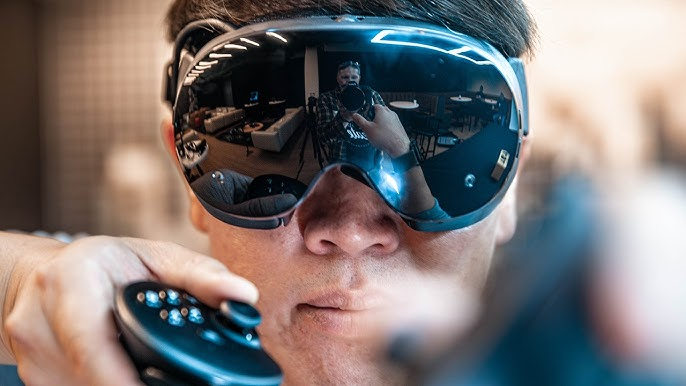
Table of Contents
- Introduction: Steam Frame and Valve’s Vision for Next-Gen VR
- What Is Steam Frame by Valve?
- Steam Frame Expected Launch Date
- Design Philosophy and Build Quality
- Display Technology and Visual Experience
- Refresh Rate and Image Smoothness
- Optics and Lens Advancements
- Tracking System and Motion Accuracy
- Controllers and Input Innovations
- Audio Experience and Spatial Sound
- Performance Requirements and PC Integration
- SteamVR Software Ecosystem
- AI-Powered Rendering and Performance Optimization
- Comfort Features for Long VR Sessions
- Use Cases Beyond Gaming
- Steam Frame vs Valve Index
- Steam Frame vs Other VR Headsets
- Expected Price of Steam Frame VR Headset
- Availability and Release Regions
- Who Should Buy Steam Frame?
- Should You Wait for Steam Frame?
- Future of Valve VR Technology
- Final Thoughts
With rapid advances in display technology, motion tracking, and AI-powered rendering, the Steam Frame VR headset could represent Valve’s vision for the future of high-end virtual reality. In this article, we explore everything you need to know about Steam Frame, including its expected launch timeline, design, display, performance, features, software integration, pricing expectations, and how it could compete with other VR headsets.
What Is Steam Frame by Valve?
Steam Frame is widely believed to be Valve’s upcoming next-generation VR headset, positioned as a successor or evolution beyond the Valve Index. While Valve has not officially confirmed the name or full details, Steam Frame is expected to be deeply integrated with:
- SteamVR
- Steam ecosystem and PC gaming
- Advanced VR tracking technologies
Unlike standalone VR headsets, Steam Frame is expected to focus on premium PC-powered virtual reality, delivering uncompromised visuals, precision tracking, and immersive gameplay for enthusiasts and professionals.
Steam Frame Expected Launch Date
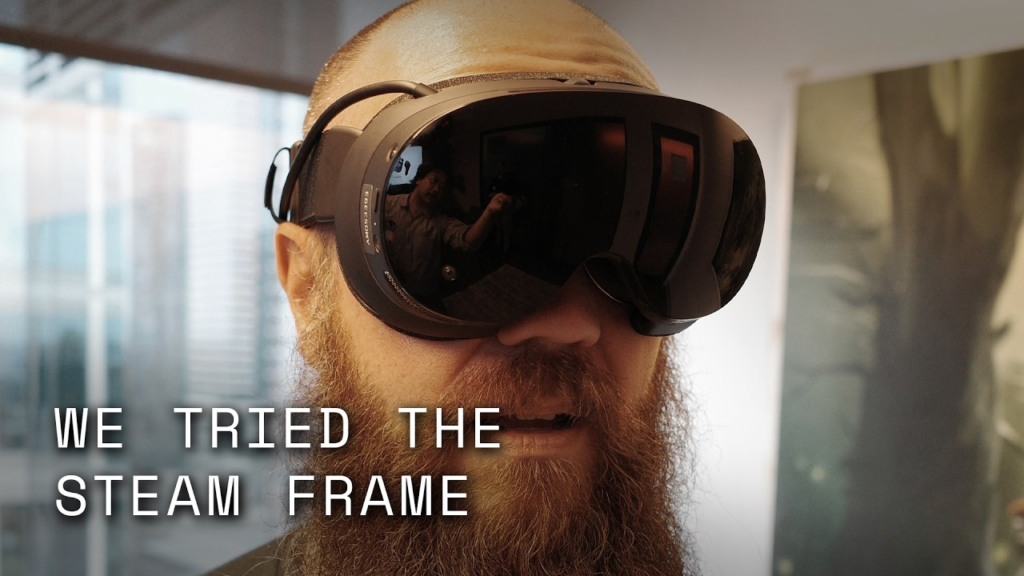
Valve is known for taking its time with hardware development, prioritizing innovation and polish over speed. Based on industry trends and Valve’s past product cycles, the Steam Frame VR headset is expected to launch in 2026.
Expected Launch Timeline
- Announcement window: Late 2025 or 2026
- Possible reveal: Major gaming or developer event
- Release strategy: Limited launch followed by global rollout
Valve may first introduce Steam Frame to developers before a wider consumer release to ensure strong software support at launch.
Design Philosophy: Comfort, Modularity, and Immersion
Design has always been a strength of Valve’s VR hardware, and Steam Frame is expected to continue that tradition.
Expected Design Highlights
- Ergonomic and balanced headset design
- Improved weight distribution for long sessions
- Premium materials for durability
- Adjustable head strap and facial interface
- Modular components for future upgrades
Valve is likely to focus on comfort for extended use, making Steam Frame suitable for long gaming sessions, creative work, and VR simulations.
Display Technology: A Major Leap Forward
The display is one of the most critical aspects of any VR headset, and Steam Frame is expected to deliver a significant upgrade over previous generations.

Expected Display Features
- Dual high-resolution displays
- Advanced LCD or micro-OLED panels
- Higher pixel density for sharper visuals
- Reduced screen-door effect
- Wide field of view (FOV)
Valve may also focus on color accuracy, contrast, and brightness, ensuring realistic environments and improved immersion across all VR experiences.
Refresh Rate and Visual Smoothness
High refresh rates are essential for reducing motion discomfort and maintaining immersion.
Performance Expectations
- High refresh rate support (above standard levels)
- Smooth frame pacing for demanding PC VR titles
- Optimized rendering pipeline through SteamVR
Valve’s experience with the Index suggests Steam Frame will prioritize smooth, responsive visuals as a core feature.
Next-Generation Optics and Lenses
Optical clarity plays a huge role in VR comfort and immersion.
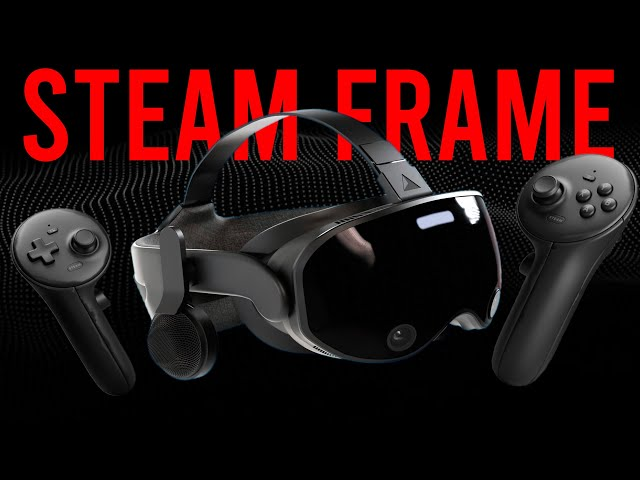
Expected Lens Improvements
- Advanced lens design to reduce distortion
- Larger sweet spot for clearer visuals
- Reduced glare and internal reflections
- Improved edge-to-edge clarity
These improvements could make Steam Frame more comfortable for long sessions and better for text-heavy or productivity-focused VR applications.
Tracking System: Precision Redefined
Valve pioneered advanced tracking with its lighthouse system, and Steam Frame is expected to refine this even further.
Expected Tracking Features
- Next-generation external or hybrid tracking
- Extremely accurate head and hand tracking
- Low latency motion detection
- Full room-scale VR support
Valve may also explore combining external tracking with onboard sensors for greater flexibility and ease of setup.
Controllers and Input Innovations
Input devices are critical for immersive interaction in VR.
Expected Controller Features
- Advanced hand and finger tracking
- Pressure-sensitive inputs
- Improved haptics for realism
- Ergonomic controller design
Valve may continue evolving its controller technology to provide more natural and intuitive interaction with virtual environments.
Audio Experience: Immersive Spatial Sound
Audio immersion is just as important as visuals in VR.
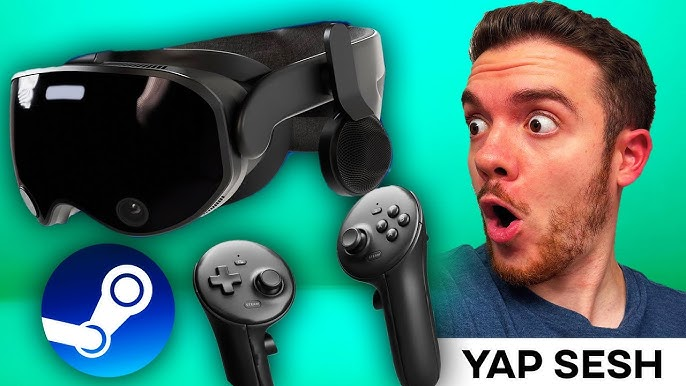
Expected Audio Enhancements
- Integrated spatial audio system
- Open-ear or near-ear speakers
- Clear voice communication
- Enhanced environmental sound positioning
Valve’s focus on spatial audio could make Steam Frame one of the most immersive VR headsets available.
Performance Requirements and PC Integration
Steam Frame is expected to be a PC-powered VR headset, requiring a capable gaming PC.
Expected System Requirements
- High-end GPU support
- Modern multi-core CPU compatibility
- Fast memory and storage
- Optimized drivers for SteamVR
Valve may also improve performance efficiency, allowing better scaling across a wider range of PC hardware.
SteamVR and Software Ecosystem
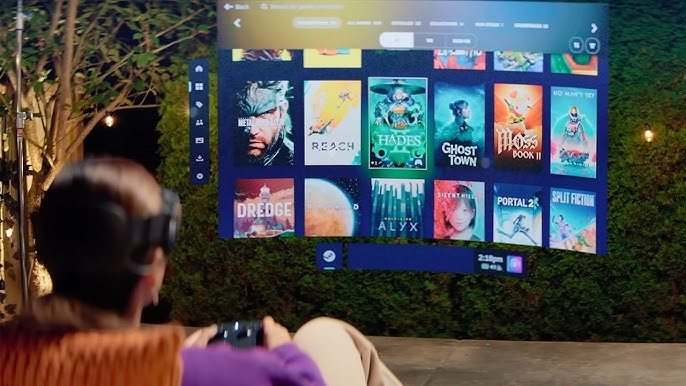
One of Steam Frame’s biggest strengths will be its seamless integration with SteamVR.
Software Advantages
- Access to thousands of VR titles
- Strong developer tools and SDKs
- Regular platform updates
- Backward compatibility with existing VR games
Valve’s ecosystem ensures that Steam Frame users will have immediate access to a vast library of content.
AI and Smart Rendering Technologies
Modern VR increasingly relies on AI to improve performance and visuals.
Expected AI Features
- Smart upscaling techniques
- Dynamic resolution adjustment
- Performance optimization in real time
- Reduced latency through predictive rendering
These features could help Steam Frame deliver high visual quality without excessive hardware demands.
Comfort Features for Long Sessions
Extended VR sessions require careful attention to user comfort.
Comfort Enhancements
- Improved ventilation and heat management
- Adjustable fit for different head sizes
- Reduced eye strain through optical tuning
- Lightweight materials
Valve is expected to design Steam Frame for hours of comfortable use, not just short demos.
Use Cases Beyond Gaming
While gaming is the primary focus, Steam Frame could support many other applications.
Potential Use Cases
- Virtual workspaces
- VR training and simulations
- Creative design and 3D modeling
- Social VR experiences
- Education and research
This versatility could make Steam Frame appealing beyond just gamers.
Steam Frame vs Valve Index
Steam Frame is expected to improve upon the Valve Index in several key areas.
Key Differences
- Higher display resolution
- Better optics and lenses
- Improved comfort and ergonomics
- More advanced tracking and input
- Future-ready hardware design
For current Index owners, Steam Frame could represent a meaningful upgrade rather than a minor refresh.
Steam Frame vs Competing VR Headsets
Steam Frame will compete with other high-end VR headsets in the market.
Valve’s Competitive Advantages
- Strong PC VR ecosystem
- Deep Steam integration
- Advanced tracking technology
- Focus on performance and immersion
Valve’s open platform approach may appeal strongly to PC enthusiasts and developers.
Expected Price of Steam Frame VR Headset
Valve has historically positioned its hardware in the premium segment.
Pricing Expectations
- Premium pricing reflecting high-end features
- Positioned above entry-level VR headsets
- Targeted at enthusiasts and professionals
While not budget-focused, Steam Frame is expected to offer strong value for its feature set.
Availability and Regions
Valve typically launches hardware in select regions first.
Expected Availability
- Initial launch in major markets
- Gradual expansion to more regions
- Direct sales through Steam
Stock availability may be limited initially due to high demand.
Who Should Buy Steam Frame?
Steam Frame is likely ideal for:
- Hardcore PC gamers
- VR enthusiasts
- Developers and creators
- Simulation and training users
- Anyone seeking premium VR experiences
Casual users may prefer simpler or standalone VR solutions.
Should You Wait for Steam Frame?
You should consider waiting if:
- You want next-generation PC VR
- You value high-end visuals and tracking
- You already use SteamVR extensively
- You want future-proof VR hardware
Steam Frame could represent the next major leap in PC-based virtual reality.
Future of Valve VR
Steam Frame may not just be a headset, but a platform for the future of VR. Valve’s long-term vision likely includes:
- Continuous software improvements
- Expanded developer support
- Integration with future Steam technologies
This long-term commitment could make Steam Frame a solid investment.
Final Thoughts
The Steam Frame Valve VR headset is shaping up to be one of the most exciting upcoming VR devices for PC enthusiasts. With a focus on premium display technology, precision tracking, deep SteamVR integration, and long-term ecosystem support, Valve aims to push virtual reality closer to mainstream adoption—without sacrificing quality.
While official details remain limited, expectations are high. If Valve delivers on its vision, Steam Frame could become the new benchmark for high-end PC virtual reality.