


Introduction: A Major Upgrade for the U.S. Army’s Stryker Fleet
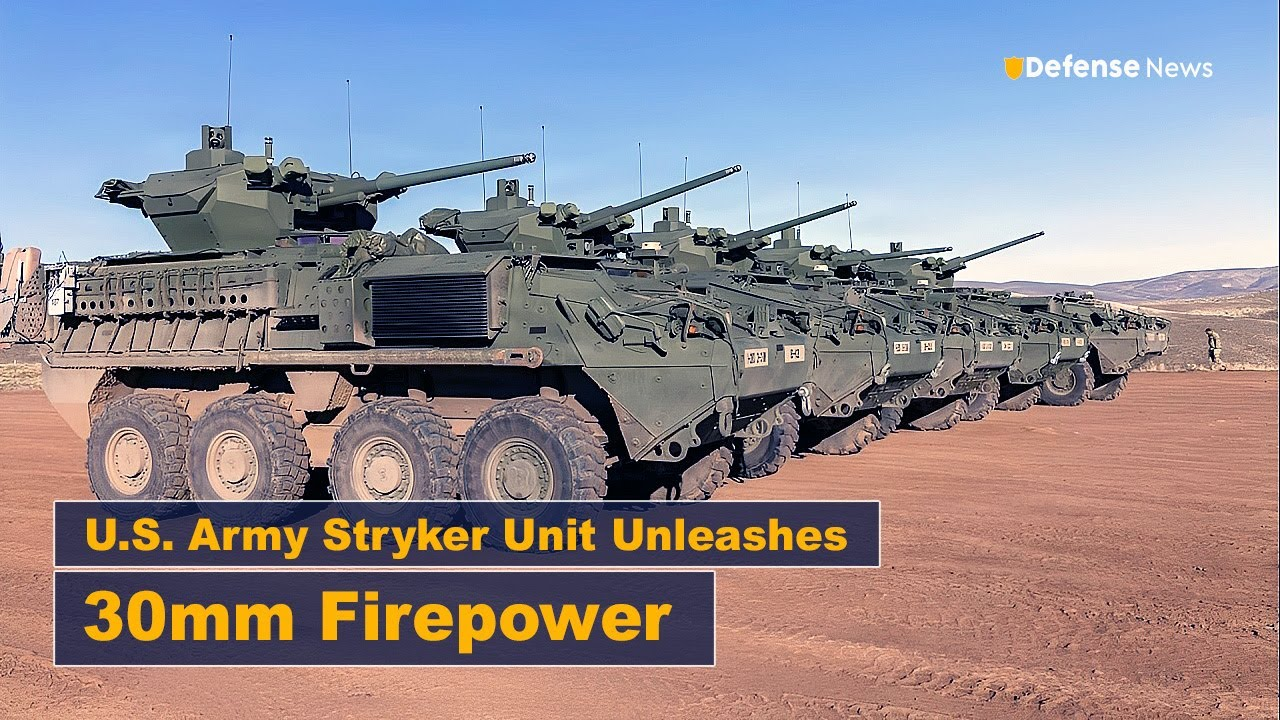
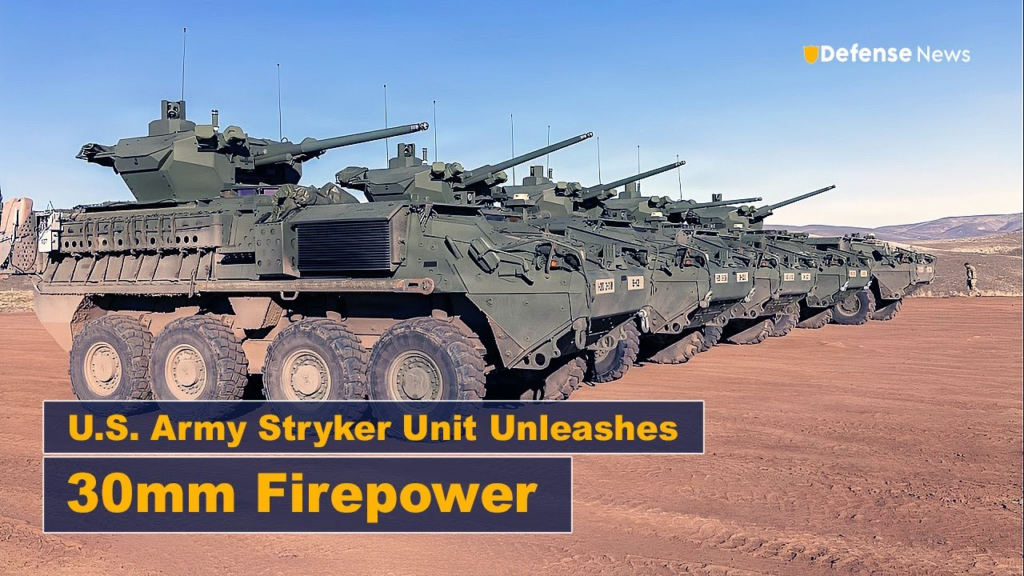
The U.S. Army has taken another significant step in modernizing its ground combat capabilities by testing 8×8 Stryker Infantry Fighting Vehicles (IFVs) equipped with the new 30mm Medium Caliber Weapon System (MCWS). This upgrade represents a decisive shift in how the Army envisions firepower, survivability, and lethality for its rapidly deployable forces.
Table of Contents
As near-peer competition intensifies and armored threats evolve, the traditional Stryker armed with a .50-caliber machine gun or 40mm grenade launcher no longer meets battlefield demands. The integration of the 30mm MCWS cannon system is designed to close this capability gap, enabling Stryker units to engage enemy armor, fortified positions, drones, and infantry with far greater effectiveness.

Why the U.S. Army Is Upgrading the Stryker IFV
Changing Battlefield Threats
Modern battlefields now feature:
- Heavily armored infantry fighting vehicles
- Long-range anti-tank weapons
- Armed drones and loitering munitions
- Highly mobile mechanized forces
The original Stryker configuration lacked the firepower necessary to counter these threats, especially in high-intensity conflict scenarios against peer adversaries.
Lessons From Recent Conflicts
Conflicts in Eastern Europe and the Middle East have reinforced a clear lesson: light and medium armored vehicles must possess organic firepower capable of defeating enemy IFVs and suppressing fortified positions. The 30mm cannon provides that missing edge.
Overview of the 30mm Medium Caliber Weapon System (MCWS)
What Is the 30mm MCWS?
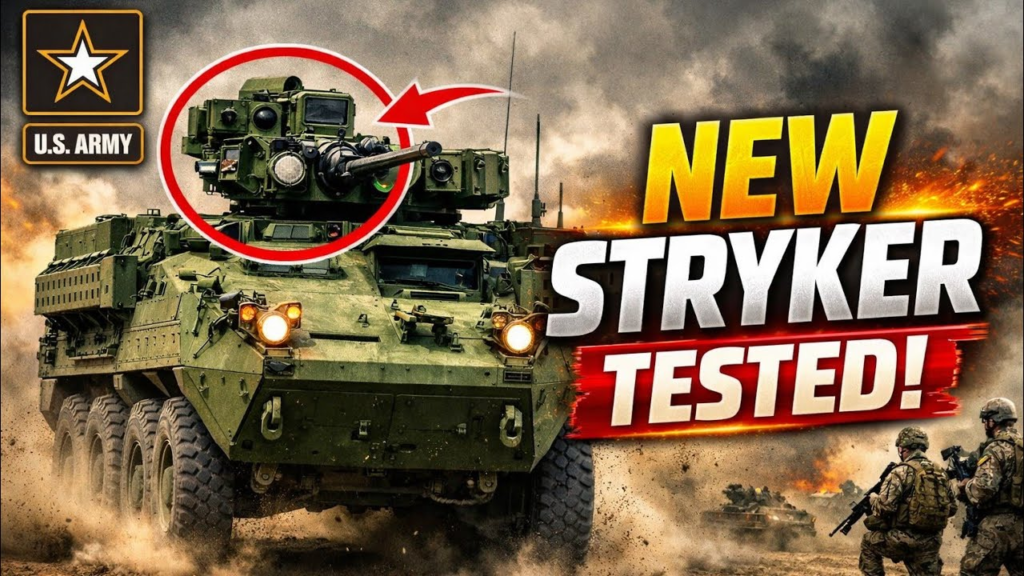
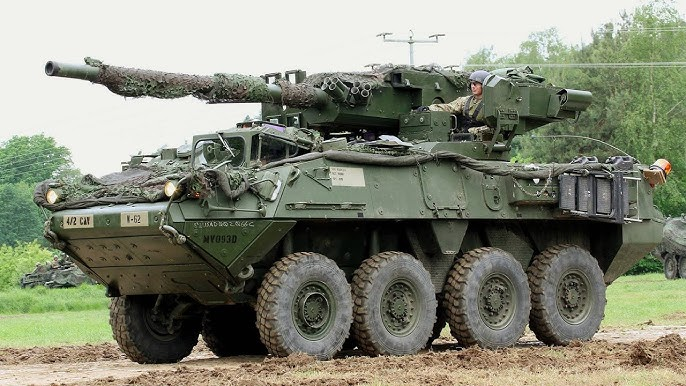
The 30mm Medium Caliber Weapon System (MCWS) is a remotely operated turret equipped with a 30×173mm automatic cannon, offering vastly improved lethality over legacy weapon stations.
Key features include:
- Remote operation from inside the vehicle
- Stabilized fire on the move
- Advanced targeting optics
- Programmable ammunition capability
Core Capabilities of the 30mm Cannon
The 30mm cannon allows the Stryker IFV to:
- Destroy enemy light armored vehicles
- Neutralize infantry behind cover
- Engage aerial threats such as drones
- Deliver precision fire at extended ranges
Compared to machine guns, the MCWS dramatically increases both range and destructive power.
Technical Specifications of the Stryker 30mm Variant
Vehicle Platform: 8×8 Stryker IFV
The Stryker is an 8×8 wheeled armored vehicle, known for:
- High mobility on roads and rough terrain
- Rapid strategic deployability
- Modular mission configurations
The 30mm variant enhances lethality while preserving mobility.
Weapon System Details
Key specifications of the 30mm MCWS include:
- Caliber: 30mm
- Effective range: Up to 3,000 meters
- Rate of fire: Selectable, depending on ammunition
- Ammunition types: Armor-piercing, high-explosive, airburst
Fire Control and Targeting Systems
The system integrates:
- Day and thermal imaging
- Laser rangefinder
- Advanced ballistic computer
- Hunter-killer target acquisition capability
This allows rapid target engagement under all weather and visibility conditions.
U.S. Army Testing Program: What Was Evaluated?
Objectives of the Testing Phase
The U.S. Army conducted testing to evaluate:
- Accuracy while stationary and on the move
- System reliability under combat conditions
- Crew workload and ergonomics
- Integration with existing Stryker units
The goal was to ensure the MCWS performs effectively in real-world combat scenarios.
Live-Fire Exercises and Maneuver Tests
During testing, Stryker units conducted:
- Live-fire drills against armored and soft targets
- Coordinated maneuvers with infantry units
- Night operations using thermal optics
Results demonstrated significantly improved engagement success rates compared to legacy systems.
Tactical Advantages of the 30mm-Armed Stryker
Enhanced Infantry Support
The upgraded Stryker provides infantry units with:
- Immediate direct fire support
- Improved suppression of enemy positions
- Greater survivability during assaults
This transforms the Stryker into a true infantry fighting vehicle rather than a simple troop carrier.
Improved Deterrence and Survivability
The visible presence of a 30mm cannon:
- Deters enemy armored vehicles
- Reduces vulnerability to ambushes
- Enhances battlefield dominance
Enemy forces must now treat Stryker formations as serious combat threats.
Comparison With Other IFVs and Allied Systems
How the Stryker 30mm Compares Globally
The upgraded Stryker now aligns more closely with:
- Russian BMP-3 IFVs
- Chinese ZBD-04 vehicles
- European IFVs armed with 30–35mm cannons
While lighter than tracked IFVs, the Stryker benefits from superior mobility and deployability.
NATO Interoperability Benefits
The 30mm caliber is widely used among NATO allies, improving:
- Ammunition compatibility
- Joint training operations
- Coalition combat effectiveness
This enhances the U.S. Army’s ability to operate seamlessly with allied forces.
Challenges and Limitations of the Upgrade
Weight and Mobility Considerations

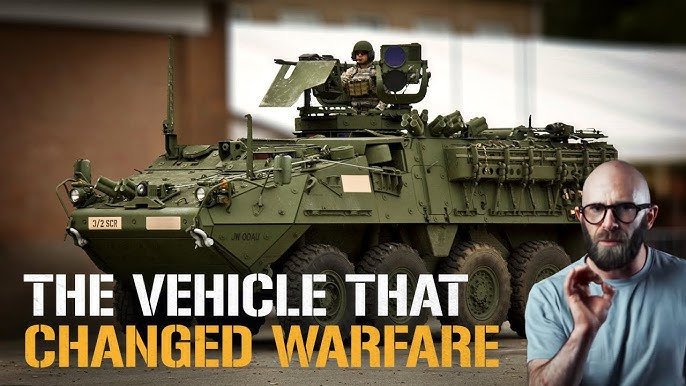
Adding a turret and cannon increases:
- Vehicle weight
- Center of gravity
- Maintenance demands
However, testing indicates that the Stryker maintains acceptable mobility levels.
Cost and Logistics
Upgrading the fleet involves:
- Turret installation costs
- Crew retraining
- Supply chain adjustments
Despite these challenges, the Army views the upgrade as cost-effective compared to acquiring entirely new vehicles.
Role of the Stryker 30mm in Future U.S. Army Doctrine
Bridging the Capability Gap
The 30mm-armed Stryker fills a critical gap between:
- Light infantry vehicles
- Heavy tracked IFVs
It allows rapid-response units to deploy with credible firepower.
Integration With Multi-Domain Operations
The upgraded Stryker supports:
- Networked battlefield awareness
- Combined arms maneuver
- Integration with drones and artillery
This aligns with the Army’s Multi-Domain Operations (MDO) doctrine.
Future Developments and Potential Upgrades
Additional Weapon Integration
Future enhancements may include:
- Anti-tank guided missiles
- Counter-drone systems
- Improved active protection systems
These upgrades could further increase survivability.
Export and Allied Interest
Several allied nations operating Stryker-like platforms are closely watching the program, potentially opening the door to:
- Foreign military sales
- Joint development initiatives
Strategic Implications for Global Military Balance
Strengthening U.S. Rapid Deployment Forces
The upgraded Stryker significantly improves the combat power of:
- Brigade Combat Teams
- Expeditionary forces
- Forward-deployed units
This enhances U.S. deterrence in Europe and the Indo-Pacific.
Message to Peer Adversaries
The successful testing sends a clear signal:
- The U.S. Army is adapting quickly
- Medium forces are no longer lightly armed
- Technological gaps are being closed
Conclusion: A Transformational Step for the Stryker Platform
The U.S. Army’s testing of 8×8 Stryker IFVs equipped with the new 30mm MCWS cannon system marks a transformative moment for the platform. By dramatically increasing lethality, situational awareness, and battlefield relevance, the upgraded Stryker is poised to play a central role in future conflicts.
As threats evolve and competition intensifies, this modernization effort ensures that U.S. soldiers retain a decisive edge—delivering firepower, mobility, and adaptability on tomorrow’s battlefields.
What is the 30mm MCWS cannon system on the Stryker IFV?
The 30mm Medium Caliber Weapon System (MCWS) is a remotely operated turret mounted on the Stryker IFV, equipped with a 30×173mm automatic cannon that significantly enhances firepower, range, and target engagement capability.
Why is the U.S. Army upgrading the Stryker with a 30mm cannon?
The upgrade addresses modern battlefield threats such as enemy IFVs, fortified positions, and drones, providing Stryker units with greater lethality and survivability in high-intensity conflicts.
Which Stryker variants are receiving the 30mm MCWS?
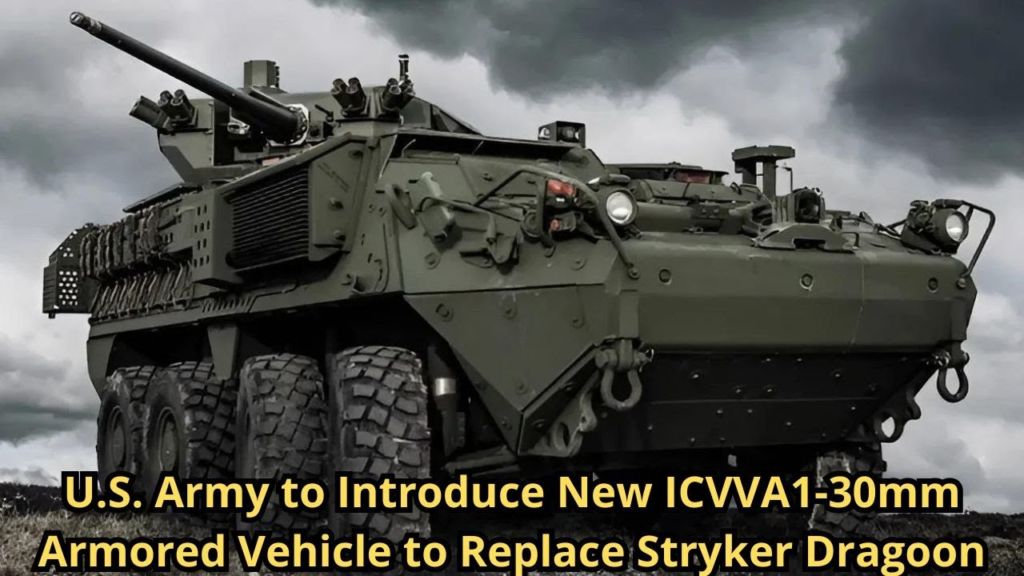
The primary variant receiving the upgrade is the Stryker Infantry Carrier Vehicle–Dragoon (ICV-D), which is specifically configured for increased combat roles.