


Introduction: A Major Step in Modernizing British Artillery
Next-Gen Firepower: The British Army is moving forward with one of its most important artillery modernization programs in decades as its new RCH155 wheeled howitzers prepare to undergo extensive testing and evaluation in Germany. The Remote Controlled Howitzer 155mm (RCH155) represents a fundamental shift in how the United Kingdom plans to deploy, protect, and operate long-range firepower on future battlefields.
Table of Contents
Designed to replace aging AS90 tracked self-propelled guns, the RCH155 offers greater mobility, automation, and survivability, reflecting lessons learned from recent high-intensity conflicts. Testing in Germany, a country with advanced military infrastructure and varied terrain, will play a crucial role in validating the system before full operational service.

What Is the RCH155 Wheeled Howitzer?
Overview of the RCH155 System
The RCH155 is a 155mm wheeled self-propelled howitzer developed by KNDS (formerly Krauss-Maffei Wegmann). It is based on the proven Boxer 8×8 armored vehicle platform, widely used by NATO forces.
Key design goals include:
- High strategic and tactical mobility
- Reduced crew exposure through automation
- Rapid shoot-and-scoot capability
- Interoperability with NATO artillery systems
Why the British Army Selected the RCH155
The British Army selected the RCH155 due to:
- Proven performance of the Boxer platform
- Fully automated turret operation
- Compatibility with NATO 155mm ammunition
- Lower lifecycle costs compared to tracked systems
The system aligns with the Army’s transformation under Future Soldier reforms.
The Need to Replace the AS90 Artillery System
Limitations of the AS90
The AS90, introduced in the 1990s, faces increasing challenges:
- Aging components
- High maintenance demands
- Limited automation
- Reduced survivability in modern combat
Recent conflicts have demonstrated that artillery systems must be faster, more precise, and less exposed.
Lessons From Ukraine and Modern Warfare
High-intensity warfare has shown that:
- Artillery positions are rapidly targeted
- Counter-battery fire is highly lethal
- Mobility and speed are critical for survival
The RCH155’s wheeled design enables quick relocation after firing, improving survivability.
Why Germany Was Chosen for Testing and Evaluation
Advanced Training and Testing Facilities
Germany offers:
- World-class military proving grounds
- Extensive artillery ranges
- NATO interoperability testing environments
These facilities allow comprehensive evaluation under realistic combat conditions.
Terrain and Climate Diversity

Testing in Germany exposes the RCH155 to:
- Forested terrain
- Open plains
- Urban training zones
- Seasonal weather variations
This ensures performance validation across multiple environments.
Scope of the RCH155 Testing Program
Mobility and Maneuver Testing
Key focus areas include:
- On-road and off-road mobility
- Speed over rough terrain
- Stability during firing
- Endurance over long distances
The Boxer chassis is expected to demonstrate excellent mobility.
Firepower and Accuracy Evaluation
Testing will assess:
- Maximum firing range
- Accuracy and consistency
- Rate of fire
- Ammunition compatibility
The RCH155 can fire NATO-standard 155mm rounds, including extended-range munitions.
Automation and Crew Safety
One of the RCH155’s defining features is its fully remote-controlled turret.
Evaluators will examine:
- Automated loading performance
- Crew workload reduction
- Safety during sustained fire missions
The crew remains inside the armored cabin during firing.
Technical Specifications of the RCH155
Core System Characteristics
Key specifications include:
- Caliber: 155mm
- Platform: Boxer 8×8
- Crew: Reduced compared to AS90
- Range: Over 40 km with extended-range rounds
Advanced Fire Control Systems
The howitzer features:
- Digital fire control
- GPS-guided targeting
- Automated gun laying
- Networked battlefield integration
These capabilities allow rapid response to fire missions.
Operational Advantages for the British Army
Improved Survivability
Key survivability enhancements include:
- Shoot-and-scoot capability
- Reduced crew exposure
- Armored cabin protection
This reduces vulnerability to counter-battery fire.
Strategic Mobility and Rapid Deployment
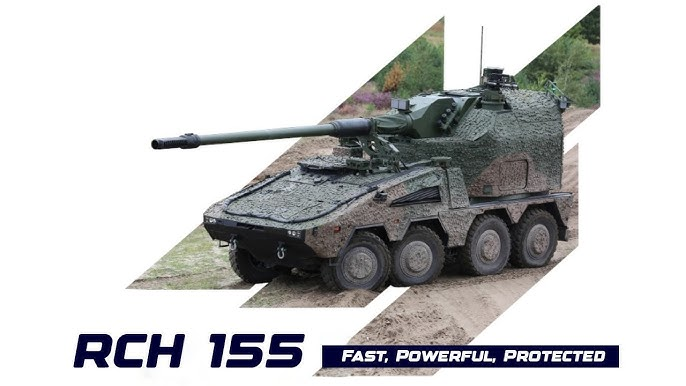
Wheeled artillery offers:
- Faster road movement
- Easier air and sea transport
- Reduced logistical footprint
This supports expeditionary operations and NATO commitments.
Interoperability With NATO Forces
Standardized Ammunition and Systems
The RCH155 uses NATO-standard 155mm ammunition, allowing:
- Shared logistics
- Joint operations
- Allied resupply in combat
Integration Into NATO Fire Networks
The system is designed to integrate with:
- NATO digital command systems
- Allied targeting networks
- Joint fires coordination
This enhances coalition effectiveness.
Challenges and Considerations
Transition From Tracked to Wheeled Artillery
The shift presents challenges such as:
- Adapting doctrine
- Retraining crews
- Adjusting maintenance procedures
However, benefits outweigh the transition costs.
Cost and Procurement Timeline
While cost-effective over its lifecycle, the program requires:
- Upfront investment
- Careful scheduling
- Infrastructure adaptation
Testing results will inform final procurement decisions.
Future of British Artillery After RCH155
Modernization Under Future Soldier
The RCH155 fits within broader reforms emphasizing:
- Lethality
- Mobility
- Digitization
- Interoperability
Potential Upgrades and Growth Options
Future enhancements may include:
- Advanced precision-guided munitions
- Improved counter-drone capabilities
- Enhanced battlefield networking
Strategic Implications for European Defense

Strengthening NATO’s Eastern Flank
Modern British artillery contributes to:
- NATO deterrence
- Rapid reinforcement capability
- Allied firepower depth
Message to Potential Adversaries
The deployment signals:
- Commitment to modernization
- Lessons learned from modern conflicts
- Continued investment in long-range fires
Conclusion: A Crucial Test for Britain’s Artillery Future
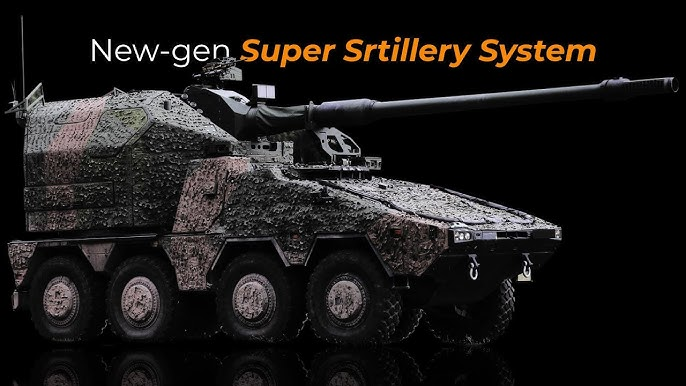
The British Army’s decision to test and evaluate its new RCH155 wheeled howitzers in Germany marks a pivotal step in rebuilding its artillery capabilities for modern warfare. By combining automation, mobility, and precision, the RCH155 is set to transform how British forces deliver long-range firepower.
Successful testing will pave the way for full operational deployment, ensuring the British Army remains a credible and lethal force within NATO and beyond.
What is the RCH155 wheeled howitzer?
The RCH155 (Remote Controlled Howitzer 155mm) is a modern wheeled self-propelled artillery system mounted on the Boxer 8×8 platform, designed to deliver long-range, high-precision fire while keeping the crew protected inside an armored cabin.
Why is the British Army testing the RCH155 in Germany?
Germany offers advanced artillery testing ranges, diverse terrain, and NATO-standard evaluation facilities, making it ideal for assessing the RCH155’s mobility, firepower, automation, and interoperability.
What is the firing range of the RCH155?
The RCH155 can fire NATO-standard 155mm ammunition, achieving ranges of over 40 kilometers when using extended-range projectiles.